

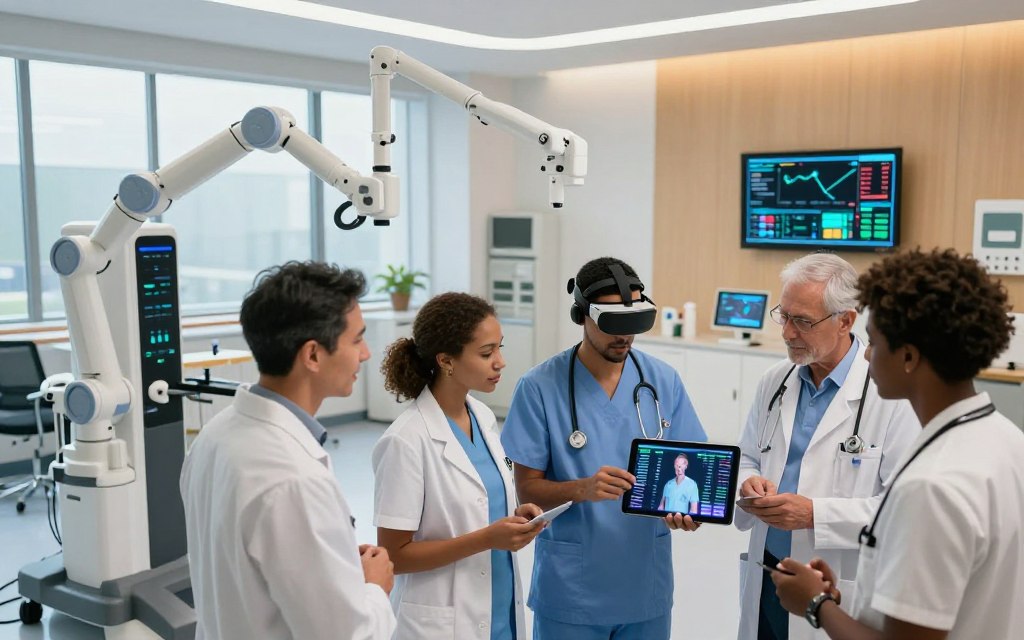
Healthcare is changing quickly across the United States. Modern tools show how technology can improve healthcare by changing how care is delivered, managed, and experienced. These advances improve efficiency, patient experiences, and health outcomes.
Healthcare technology helps doctors find problems earlier and create more personal treatments. Digital healthcare gives patients faster provider communication, better specialist access, and more coordinated care. Care must still protect clinical safety, patient privacy, affordability, accessibility, and health equity.
This article explores electronic health records, telemedicine, artificial intelligence, wearable devices, robotics, 3D printing, mobile applications, and cybersecurity. These innovations make patient care technology stronger and improve overall healthcare delivery.
Key Takeaways
- Modern tools are reshaping patient care and healthcare delivery.
- Innovations lead to earlier diagnoses and personalized treatments.
- Access to specialists is improving through digital platforms.
- Clinical safety and patient privacy must remain priorities.
- Technologies like telemedicine and AI are enhancing efficiency.
The Digital Revolution in Modern Healthcare
Healthcare is changing deeply because of the digital revolution. Digital tools have moved care from paper systems to connected digital ecosystems. These systems connect hospitals, clinics, insurers, laboratories, and patients. Cloud computing, high-speed internet, electronic data exchange, mobile devices, and advanced analytics are reshaping care delivery and management.
As digital transformation in healthcare grows, several forces are preparing the field for major technological change. An aging population, rising chronic disease rates, clinician shortages, and increasing costs create serious pressure. Patients also want convenient care that can adapt to their needs.
Setting the Stage for Technological Change
Several forces create an urgent need for healthcare innovation. An aging population strains modern healthcare systems, increases service demand, and requires better chronic disease management.
Clinician shortages worsen these challenges because fewer professionals serve a growing number of patients. Rising costs push providers and patients toward more effective, affordable solutions. Demand for convenient care is driving advances that improve access and efficiency.
Key Drivers of Healthcare Innovation in the United States
Healthcare innovation means more than adopting new tools. It requires redesigned workflows, staff training, and systems that can share information. Key drivers of healthcare innovation in the United States include:
- Federal Investment: Government funding supports research and development in health technologies.
- Consumer Expectations: Patients are increasingly expecting digital solutions for their healthcare needs.
- Value-Based Care: The shift towards value-based care models encourages efficiency and better patient outcomes.
- Competition Among Health Systems: Providers are motivated to innovate to stay competitive.
- Venture Funding: Increased investment in health tech startups fosters innovation.
- Data Management Needs: The growing volume of medical data necessitates effective management strategies.
These drivers show that healthcare innovation needs responsible leadership and measurable results, not technology alone. As healthcare evolves, health technology trends should improve patient care and deliver clear benefits for every stakeholder.
Related Posts:
- What Is Next-Gen Technology? A Look at the…

- What Do People Think About Technology Public Opinion…

- How Technology Has Changed the World Positively Key Benefits

- What Is an Information Technology Specialist Roles…

- Is Graphic Design Part of Information Technology The…

- Is Architecture Technology The Role of Tech in…

Electronic Health Records and Data Management
In today’s healthcare landscape, electronic health records (EHRs) play a key role in managing patient information. They create a comprehensive patient history with diagnoses, medications, allergies, laboratory results, imaging, procedures, and care plans. This change improves healthcare data management, increases efficiency, and supports better patient care.
One of the most significant benefits of EHR systems is that they reduce duplicate testing. When providers can access complete records, they can avoid unnecessary tests and procedures. This saves time and lowers healthcare costs.
EHRs also support medication safety. Alerts can show possible drug interactions and allergies, helping patients receive safer care.
Moreover, EHRs streamline billing processes, allowing quicker and more accurate claims submissions. They also provide clinical decision support, giving providers evidence-based guidelines at the point of care. This timely information can improve clinical outcomes and guide more informed treatment decisions.
For patients, EHRs offer equally strong advantages. Patients can review records, request medication refills, and communicate directly with clinicians. This engagement fosters a collaborative healthcare approach and empowers patients to make informed treatment decisions.
However, effective health information exchange still faces challenges. Interoperability remains a major hurdle because many healthcare systems use incompatible platforms. This creates inconsistent data formats and incomplete records, which can interrupt workflows and block smooth information exchange.
Information blocking concerns can also complicate data-sharing efforts. Cybersecurity risks threaten sensitive patient information, which requires protection from unauthorized access. Effective healthcare data management requires reliable communication among hospitals, primary care practices, pharmacies, laboratories, specialists, and patients.
Addressing these challenges is vital to advancing healthcare technology. For more information on the benefits of EHR systems, visit this resource.
Telemedicine: How Technology Can Improve Healthcare Access
Telemedicine is changing healthcare access for patients everywhere. Through technology, providers can offer care beyond traditional clinic walls. This support improves remote patient care, especially for people who struggle to reach medical services.
Telemedicine supports virtual consultations and remote care delivery. Common uses include:
- Primary care follow-ups: Patients can check in with their doctors without needing to travel.
- Behavioral health visits: Mental health services are more accessible through virtual platforms.
- Medication management: Patients can discuss their prescriptions and side effects remotely.
- Dermatology evaluations: Skin conditions can be assessed via secure video calls.
- Postoperative check-ins: Surgeons can monitor recovery from a distance.
- Chronic disease consultations: Ongoing management of conditions like diabetes can occur virtually.
These virtual healthcare options reduce travel, waiting times, and the risk of exposure to infectious illnesses. Still, clear escalation paths must guide cases needing in-person exams.
Telemedicine greatly helps rural and underserved communities. It connects patients with specialists who may not work nearby. This matters most for people facing:
- Transportation barriers: Many patients struggle to reach healthcare facilities due to distance.
- Mobility issues: Those with disabilities can receive care from the comfort of their homes.
- Scheduling conflicts: Virtual appointments offer flexibility that traditional visits may not.
Despite its benefits, telemedicine has limits, including broadband gaps, limited device access, and different levels of digital literacy. These problems can reduce its value. Also, reimbursement policies may not support virtual care, so equitable in-person options remain necessary.
Artificial Intelligence in Diagnosis and Treatment
Artificial intelligence in healthcare is changing how doctors diagnose and treat patients. AI helps clinicians study complex medical data, find patterns, and make informed decisions faster. It improves diagnosis accuracy and makes treatment planning more efficient, which can improve patient outcomes.
AI diagnostics are changing medical imaging and testing. They can detect abnormalities in radiology images, flag possible cancers, and analyze pathology slides. For example, algorithms help radiologists review many studies quickly, so critical cases receive timely attention.
These tools should support, not replace, qualified clinical judgment. They must also be tested across diverse patient populations to ensure effectiveness and reliability.
AI-Powered Diagnostic Tools and Medical Imaging
In medical imaging, AI has made major advances. It can study huge amounts of data and find subtle patterns that people may miss. This helps detect early diseases, when quick treatment can improve outcomes.
As providers adopt these AI diagnostics, diagnostic errors may decrease and patient care may become faster.
Machine Learning in Treatment Planning
Machine learning, a type of AI, plays a key role in treatment planning. By combining clinical history, laboratory values, imaging results, genetics, and treatment responses, algorithms assess tailored care strategies. This approach improves treatment effectiveness and reduces adverse effects by finding suitable options for each patient.
As healthcare evolves, machine learning in medicine will become more important. It supports precise, data-driven decisions, helping patients receive the best possible care for their unique circumstances.
Predictive Analytics for Preventive Care
Predictive analytics healthcare tools can identify patients who may need screenings, medication adjustments, or early interventions. This proactive approach can improve health outcomes and reduce healthcare costs.
However, predictive analytics requires careful planning. Transparency, bias testing, human oversight, data quality, informed consent, and continuous performance monitoring are essential. These safeguards help models stay effective and fair while protecting ethical care and patient trust.
Artificial intelligence in healthcare is paving the way for a more efficient and effective healthcare system. AI diagnostics, machine learning in treatment planning, and predictive analytics can transform patient care and improve overall health outcomes.
For more insights on how technology is positively impacting the world, check out this resource.
Wearable Technology and Remote Patient Monitoring
Wearable technology in healthcare supports continuous health tracking and better patient outcomes. With various connected health devices, providers can monitor patients more effectively. Smartwatches, fitness trackers, continuous glucose monitors, and connected blood-pressure cuffs support checks between appointments.
Smart Devices for Continuous Health Tracking
These devices capture vital health information and reveal changes that traditional care may miss. Ongoing measures of heart rate, blood oxygen, glucose, weight, sleep patterns, and activity can reveal critical health insights.
A continuous glucose monitor gives real-time data for remote patient monitoring. It helps diabetic patients manage their blood sugar levels more effectively. Smartwatches can track heart rate variability, which helps assess cardiovascular health.
Integration with Healthcare Provider Systems
Data from these devices can move into healthcare provider systems. This supports clinical dashboards, patient records, alerts, care plans, and virtual follow-ups.
A connected blood-pressure cuff can send readings directly to a patient’s electronic health record, enabling physicians to monitor trends over time. Real-time sharing improves the quality of care.
Real-World Applications of Wearable Data
Wearable data already supports important real-world uses:
- Identifying Deterioration in Heart Failure: Continuous monitoring can alert healthcare providers to changes in a patient’s condition, allowing for timely interventions.
- Supporting Diabetes Management: Wearable devices provide real-time feedback, helping patients adjust their treatment plans as needed.
- Monitoring Recovery After Surgery: Patients can track their progress and share data with their healthcare teams, ensuring a smoother recovery process.
- Encouraging Physical Activity: Fitness trackers motivate users to maintain healthy habits by setting and tracking personal goals.
- Evaluating Medication Response: Wearable readings can help clinicians assess how well a patient is responding to treatment.
Wearable technology offers clear benefits, but teams must handle its data securely and ethically. Readings need context, device validation, and patient consent. Careful alert thresholds can prevent patient anxiety and clinician alert fatigue.
| Device Type | Key Features | Primary Use |
|---|---|---|
| Smartwatch | Heart rate, activity tracking | General health monitoring |
| Continuous Glucose Monitor | Real-time glucose levels | Diabetes management |
| Connected Blood-Pressure Cuff | Automatic readings, data sharing | Hypertension management |
| Pulse Oximeter | Blood oxygen saturation | Respiratory health monitoring |
| Smart Scale | Weight, body composition | Weight management |
Robotics and Automation in Surgical Procedures
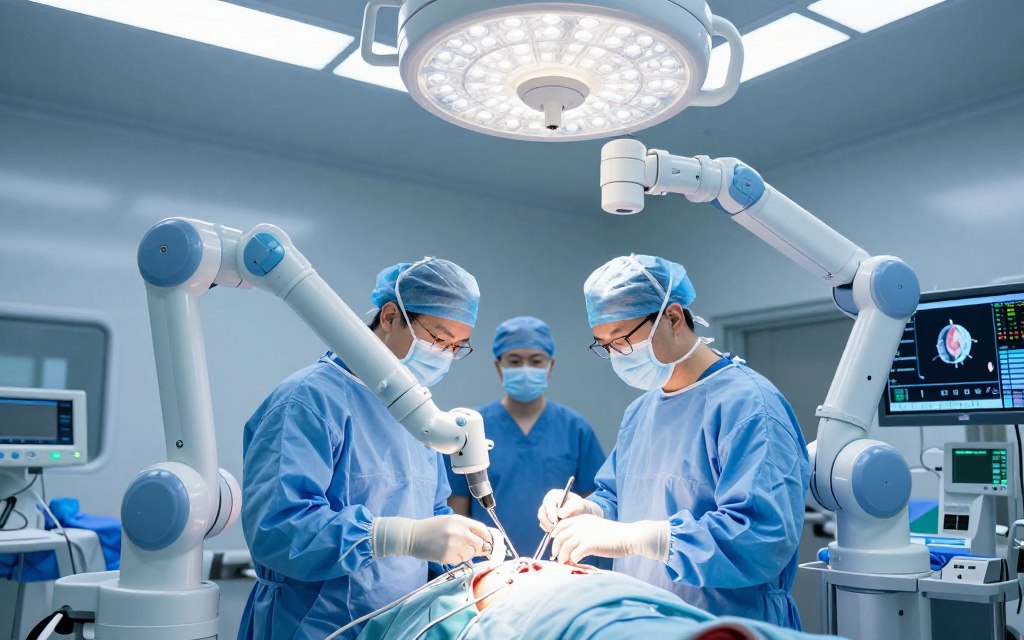
Robotic surgery and healthcare automation are changing healthcare. These advances improve surgical precision and streamline hospital operations, leading to better patient outcomes and greater efficiency.
Surgical technology gives surgeons clearer views and better control of instruments. It reduces tremors and helps surgeons reach difficult anatomical areas.
Trained surgeons operate surgical robots; the robots do not work independently. Robotic surgery offers these benefits:
- Smaller incisions: This minimizes tissue disruption, leading to quicker recovery times.
- Greater precision: Surgeons can perform intricate procedures with improved accuracy.
- Consistent movement: Automation helps in maintaining steady hands during surgery.
Robotic surgery outcomes depend on the specific operation, the patient’s condition, the care team, and the technology used. Each factor can affect the procedure’s success.
Automation in Hospital Operations and Pharmacy Services
Hospital operations technology and healthcare automation also change hospital operations and pharmacy services. Automated systems manage medication dispensing, inventory, and laboratory processing. Transport robots and scheduling software improve efficiency.
Here are key areas where automation has a major impact:
| Automation Area | Benefits | Challenges |
|---|---|---|
| Medication Dispensing | Reduces human error and improves accuracy | Requires strong safety checks |
| Inventory Management | Streamlines supply tracking | Needs regular maintenance |
| Laboratory Processing | Increases processing speed | Cybersecurity risks |
By reducing repetitive tasks, automation lets healthcare professionals focus on clinical care. However, it requires strong safety protocols, cybersecurity protections, and careful staff oversight. These safeguards help systems perform well.
3D Printing and Personalized Medical Devices
3D printing supports personalized medical devices in healthcare. It helps create devices tailored to each patient’s unique anatomy. These devices can improve fit, comfort, and the patient experience.
Custom Prosthetics and Implants
Custom prosthetics and implants are important uses of 3D printing in healthcare. Professionals can make patient-specific limbs, surgical guides, and dental devices. These solutions improve fit and comfort while helping teams plan surgeries.
3D-printed anatomical models can support education and communication between providers and patients. For example, 3D printing can create orthopedic implants that match a patient’s body. These implants may shorten production times and improve recovery.
Bioprinting and the Future of Organ Transplants
Bioprinting is an exciting area in organ transplant research. It uses living cells to print structures that could become working tissues and organs. Fully working replacement organs remain under study, but bioprinting offers hope for organ shortages.
Technical challenges include vascularization, tissue maturity, and long-term performance. Manufacturers must set standards, ensure immune compatibility, and complete clinical testing. Ethical oversight also matters before bioprinting enters medical practice.
“3D printing is not just about creating products; it’s about revolutionizing the way we approach personalized medicine.”
3D printing and personalized medical devices lead healthcare innovation. They support more precise care that responds to each patient’s needs. This approach can improve the quality of healthcare delivery.
Mobile Health Applications and Patient Engagement
Mobile health apps are changing patient engagement. They give patients practical tools to manage health beyond traditional appointments. With mHealth technology, people can join their care and achieve better health outcomes.
Chronic disease management apps support daily health routines with several useful features. Medication reminders support timely doses, while symptom tracking helps users watch their conditions closely.
Patients can log glucose levels, record blood pressure, and receive nutrition support matched to their needs. Exercise plans and mental health resources support overall well-being. Educational content about specific conditions builds understanding, while secure care-team messages support collaboration.
These tools help manage diabetes, hypertension, asthma, cardiovascular disease, and depression. When clinically appropriate and easy to use, they help patients take charge of their health.
Health Apps for Chronic Disease Management
Health apps for chronic disease management provide many useful functions. Patients can track progress and share data with healthcare providers, creating a complete view of their health journey. This data-driven approach supports self-management and improves communication with care teams.
Patient Portals and Self-Service Tools
Patient portals and self-service tools also strengthen patient engagement. Users can schedule appointments, request prescription refills, and access test results with ease. They can manage billing, receive care instructions, and communicate electronically with healthcare providers.
Meaningful engagement requires accessible tools. Plain language, multilingual support, and reliable notifications are essential features of patient engagement technology. Privacy controls build trust, while technology should empower patients without shifting complex care onto them.
Data Security and Privacy in Healthcare Technology
Healthcare technology changes quickly, so protecting patient data is essential. Patients and providers need trust to use digital health tools. Strong healthcare cybersecurity helps prevent data breaches and cyber threats from hiding technology’s benefits.
Cybersecurity Threats in Modern Healthcare
Healthcare systems face many cyber threats that can expose sensitive patient information. Understanding these threats helps protect secure health information. Here are the most serious concerns:
- Ransomware: Attackers encrypt data and demand payment for its release, potentially halting clinical operations.
- Phishing: Fraudulent emails trick employees into revealing sensitive information, leading to data breaches.
- Credential Theft: Hackers steal login credentials to access secure systems and patient records.
- Malware: Malicious software can disrupt services and corrupt data.
- Insider Threats: Employees may unintentionally or maliciously compromise data security.
- Insecure Connected Devices: IoT devices can serve as entry points for cyberattacks if not properly secured.
- Third-Party Vulnerabilities: Partnerships with vendors can introduce risks if their security measures are inadequate.
- Service Disruption: Cyberattacks can lead to significant downtime, affecting patient care and treatment.
A breach can expose protected health information, threaten patient data privacy, delay treatment, and harm an organization’s reputation.
HIPAA Compliance and Patient Trust
Healthcare organizations must achieve HIPAA compliance to build and keep patient trust. They need strong safeguards for patient data. Key parts include:
- Administrative Safeguards: Policies and procedures that manage the selection, development, and implementation of security measures.
- Physical Safeguards: Measures to protect electronic systems and related buildings from unauthorized access.
- Technical Safeguards: Technologies that protect and control access to health information.
- Access Controls: Mechanisms that limit access to patient data based on role and necessity.
- Audit Trails: Records that track access and changes to sensitive information.
- Encryption: Protecting data in transit and at rest to prevent unauthorized access.
- Workforce Training: Ensuring staff are aware of security protocols and potential threats.
- Incident Response: A plan for addressing security breaches when they occur.
HIPAA compliance provides a foundation, but it does not create a complete security strategy. Organizations must also protect patient data privacy by focusing on:
- Transparent Privacy Notices: Clear communication about how patient data is used and protected.
- Minimum-Necessary Access: Limiting access to patient information to only those who need it.
- Vendor Oversight: Regularly assessing third-party vendors for their security practices.
- Secure Authentication: Implementing strong password policies and multi-factor authentication.
- Regular Testing: Conducting security assessments and penetration testing to identify vulnerabilities.
- Prompt Communication: Informing patients quickly in the event of a data breach.
Strong privacy practices can build patient confidence and support long-term technology use in healthcare.
Challenges and Ethical Considerations of Healthcare Innovation
As healthcare technology evolves, healthcare technology ethics helps address new challenges and ethical questions. These issues shape how fair and effective care becomes for different populations. Fast-moving digital tools may limit access and create unequal care.
The Digital Divide and Healthcare Inequality
The digital divide in healthcare means unequal access to digital technologies. This gap can involve unequal access to broadband, smartphones, and computers. It may also reflect differences in transportation, digital skills, and assistive technologies.
Many vulnerable groups may lack digital-only healthcare, including older adults, low-income households, rural residents, and people with disabilities. Patients with limited English proficiency or unreliable internet face added barriers. Providers must use inclusive design and offer digital support to reduce these barriers.
Affordable connectivity, accessible interfaces, and language services can help bridge the digital divide. Continued in-person options remain vital for people who struggle with technology. These steps support greater health equity in healthcare innovation.
Balancing Innovation with Patient Privacy
Healthcare technology ethics also requires a balance between innovation and patient privacy. As new tools appear, informed consent, secondary data use, and algorithmic bias raise questions. Patients deserve to know how providers use their health information and who can access it.
Organizations must address concerns about surveillance and health information ownership. Before deployment, they must test new technologies for safety, fairness, and explainability. This review should assess clinical value and ensure patients can choose how their data is used.
Ethical healthcare innovation should improve care without harming dignity, autonomy, confidentiality, or equal treatment. These values help healthcare organizations build trust and improve overall care.
Conclusion
Technology is reshaping healthcare in remarkable ways. The benefits of healthcare technology include better access, connectivity, and personalized patient care. Electronic health records and telemedicine improve delivery, while artificial intelligence, wearable devices, and robotics make care efficient and proactive.
As we consider the future of patient care, no single tool can solve every challenge. Successful healthcare change needs advanced technology and skilled professionals working together. Organizations must support patient-centered workflows, sound clinical evidence, responsible governance, and fair access for all communities.
Protecting patient privacy and reducing bias are critical as we follow healthcare innovation trends. Human oversight remains vital for safety, quality, and affordability. Measuring patient satisfaction and health equity will guide future improvements.
The future of patient care will depend on what healthcare organizations build and how thoughtfully they use innovations. Collaboration will serve patients and communities across the United States and show how technology can improve healthcare.