

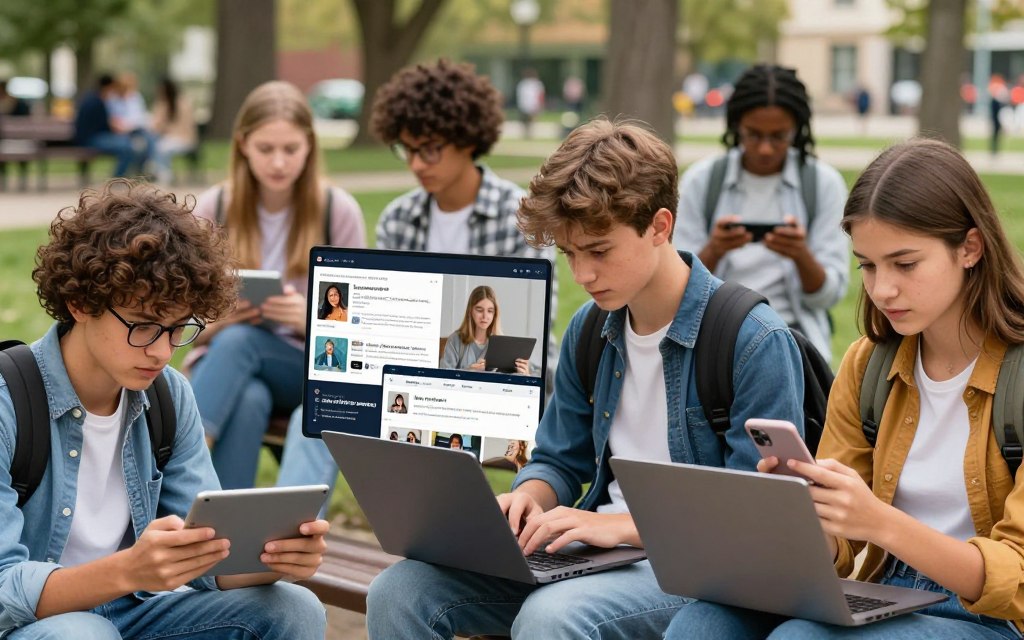
In today’s digital age, technology and teenagers are closely connected. Digital tools shape education, communication, entertainment, and personal identity. They provide vast information and creative opportunities, but they also create challenges.
Excessive screen time may cause anxiety, sleep disturbances, and cyberbullying. The impact of technology on teens depends on content type and support from family and friends. Each teen’s experience is different.
This article explores how technology affects teenagers lives through digital engagement. It examines social interactions, educational outcomes, health effects, and safety concerns. It also offers strategies for responsible teen technology use, balancing innovation with risk reduction.
Key Takeaways
- Digital tools enhance access to information and creativity.
- Excessive use can lead to anxiety and sleep issues.
- The impact varies by content type and family support.
- Social interactions can be both enriched and challenged.
- Responsible use strategies are essential for healthy engagement.
1. The Digital Landscape Teenagers Navigate Today
Teen smartphone use shapes daily life in a complex digital world. These devices support communication, entertainment, and learning. They help teens connect with friends and serve as cameras, navigation aids, and gateways to social platforms.
Social media and teenagers connect through daily engagement and personal expression. Instagram, Snapchat, and TikTok encourage rapid sharing, while teens join communities that match their interests. Platform algorithms increase exposure to attention-grabbing content, creating belonging and excitement but also overwhelm and comparison pressure.
Gaming among teens, streaming, and content creation are major trends. Many teens game not just for fun, but also to connect with peers. Twitch and YouTube let them stream gameplay and build communities.
Teens also shape digital entertainment instead of only consuming it. Content creation for teens may include editing videos, producing music, or managing online communities. This work supports creativity and self-expression, but commercial pressure and misinformation create challenges.
2. How Technology Affects Teenagers’ Lives: Social Connections and Communication
Technology has changed technology and teen communication. Teens use messaging apps and social media to maintain relationships across great distances. These connections help them build friendships and feel they belong with peers who share their interests.
Online friendships for teenagers can help those who feel isolated in local communities. Talking with like-minded people can offer emotional support and a stronger sense of identity. However, this new form of social interaction also brings challenges.
Related Posts:
- How Technology Is Transforming Healthcare and…

- What Do People Think About Technology Public Opinion…

- How Technology Has Changed the World Positively Key Benefits

- What Is Next-Gen Technology? A Look at the…

- Is Graphic Design Part of Information Technology The…

- What Is an Information Technology Specialist Roles…

Expanding Social Networks Beyond Geography
Messaging apps and social networks let teens stay in touch with friends from different schools, cities, and countries. Broader networks can enrich their lives by showing them different views and cultures. Many teens feel comforted knowing they are not alone in their experiences.
The Double-Edged Sword of Online Validation
Technology improves communication, but it also creates pressure for social media validation. Likes, comments, and follower counts can strongly affect a teenager’s self-esteem. Depending on outside approval may cause anxiety and constant online performance, creating social comparison.
Cyberbullying and Digital Harassment Concerns
Sadly, digital spaces also bring dangers. Cyberbullying and digital harassment can follow teens after school, harming their mental health and well-being. Parents and educators should recognize signs, such as sudden withdrawal from devices, emotional distress after checking messages, or changes in sleep patterns.
Recognizing Signs of Cyberbullying
Knowing warning signs supports early help. A teen who avoids discussing online activities or skips school may face distress from cyberbullying.
Reporting and Prevention Strategies
For cyberbullying prevention, take action early. Encourage teens to save harassment evidence, block abusive accounts, and use platform reporting tools. A trusted adult can offer support and guidance, while privacy settings can protect personal information and reduce risks.
3. Educational Benefits of Technology for Teenagers
Educational technology for teens has transformed how students learn and access information. Students can use many resources beyond traditional classroom walls. This access supports independent learning and critical thinking.
Access to Information and Learning Resources
Technology opens the door to an array of online learning resources. Teens can explore digital libraries, academic databases, and instructional videos when convenient. Khan Academy and Coursera offer courses at each student’s pace, while virtual museums and language-learning platforms enrich education.
Interactive Learning Through EdTech Tools
Interactive EdTech tools make abstract concepts easier to understand. Simulations, quizzes, and educational games promote active participation and engagement. Google Classroom and Quizlet support collaborative projects and immediate feedback for different learning preferences.
Developing Digital Literacy Skills for the Future
As technology evolves, building digital literacy skills becomes essential. Students must research responsibly, identify bias, cite sources accurately, and understand how algorithms shape information exposure. Educators guide students through this process so they use technology effectively and ethically.
“Technology is best when it enhances learning, not when it replaces the critical role of educators.”
Technology offers valuable educational benefits, but it works best with strong teaching and personalized support. The goal is to use technology in education to improve learning, not replace education’s essential parts.
4. Mental Health Implications of Constant Connectivity
The link between teen mental health and technology is a growing concern. Social media and instant communication keep teens more connected than ever. Yet constant engagement can create several mental health challenges.
Anxiety, Depression, and Social Comparison
Many teenagers experience anxiety and depression, partly because of social comparison among teens. Curated online images and status updates show idealized versions of life, which can create feelings of inadequacy. According to a recent study:
“Social media can create a breeding ground for anxiety, as teens constantly compare themselves to others.”
This pressure to measure up can cause low self-esteem and loneliness.
Sleep Disruption from Blue Light Exposure
Another concern involves screen time and sleep disruption. Late-night messaging and notifications can create irregular sleep routines, while blue light interferes with the body’s natural sleep cycle. Experts suggest consistent sleep routines and less screen time before bed to improve sleep quality.
FOMO and the Pressure to Stay Connected
The fear of missing out, or FOMO in teenagers, is a mental health challenge linked to constant connectivity. Teens feel pressure to follow social events and conversations because they fear missing something important. This may cause anxiety and stress, but intentional technology breaks and meaningful offline relationships can help.
| Mental Health Concerns | Impact of Technology | Recommendations |
|---|---|---|
| Anxiety and Depression | Increased social comparison | Encourage open discussions about feelings |
| Sleep Disruption | Blue light exposure and notifications | Establish screen-free bedtime routines |
| FOMO | Pressure to stay connected | Promote offline activities and breaks |
Technology can provide support and connection, but digital well-being requires recognizing its possible drawbacks. If persistent sadness, severe anxiety, or major behavior changes occur, seek help from trusted adults or professionals.

5. Physical Health Concerns from Screen Time
Screen time and teen health are linked to physical health concerns. Long screen use can lead to sedentary behavior in teenagers and other health risks. This section covers obesity, digital eye strain, and teen posture problems.
5.1 Sedentary Lifestyles and Obesity Risks
Extended screen use often replaces physical activity, increasing sedentary behavior in teenagers. Hours with screens can reduce movement and outdoor activities. Less exercise, irregular sleep, and unhealthy snacks can cause weight gain and obesity.
5.2 Eye Strain, Posture, and Repetitive Strain Issues
Many teenagers have digital eye strain, including dry eyes, blurred vision, and headaches. Poor device posture can worsen these symptoms and cause neck, back, and shoulder discomfort. Unsupported seats and bent necks can cause teen posture problems.
5.3 Recommendations for Balanced Screen Use
These steps support balanced screen use and may reduce health risks:
- Take regular movement breaks to promote physical activity.
- Adjust screen height and viewing distance to reduce strain.
- Use comfortable lighting to minimize eye discomfort.
- Maintain a neutral posture while using devices.
- Protect sleep time by limiting screen use before bed.
- Keep meals and exercise separate from entertainment screens.
- Create device-free routines to encourage family interactions.
Choose lasting habits instead of unrealistic restrictions. If pain, vision changes, or other symptoms continue, consult a health professional.
| Health Concern | Symptoms | Recommendations |
|---|---|---|
| Sedentary Lifestyle | Weight gain, decreased fitness | Regular physical activity, movement breaks |
| Digital Eye Strain | Dry eyes, headaches | Proper lighting, screen adjustments |
| Poor Posture | Neck and back pain | Ergonomic seating, posture awareness |
6. Cognitive Development and Attention Span
The link between technology and teen attention span shows how devices can shape cognitive development in teens. Constant notifications and multiple screens often push teens toward digital multitasking. This habit can split their focus and make one task harder to complete.
When teens switch among homework, social media, and games, they are not truly multitasking. They move quickly between activities, which can lead to reduced comprehension and more errors. Studies show this behavior lengthens tasks and lowers overall productivity.
Another concern is shallow processing. Many teens skim headlines or short posts without examining their context or evidence. This habit can weaken their critical thinking and technology skills. Teens can respond by reading carefully, checking sources, and reflecting on what they read.
However, technology is not always harmful. Well-designed educational apps for teenagers can support cognitive development in teens. They often build memory, problem-solving, and language skills, but their value depends on design and user engagement.
To improve focus, teens can turn off nonessential notifications during study time. They can also work in focused intervals and read longer materials. Questions about evidence and perspective can strengthen attention, while technology may weaken or improve cognitive abilities, depending on its application.
7. Privacy, Safety, and Digital Footprint Risks
The digital world gives teenagers opportunities but also risks. Knowing these risks helps protect teen online privacy and safety.
Data Collection and Targeted Advertising Practices
Many apps and websites collect user information to personalize services and advertisements. They may track activity, preferences, and location, creating a digital footprint for teenagers and enabling targeted advertising to teens. Even free platforms may involve exchanging personal data, and Understanding your digital footprint is crucial for privacy.
Online Predators and Scams Targeting Teens
Online predators use false identities or flattery to gain trust. Teens should avoid sharing personal information with strangers. Fake giveaways and urgent account warnings can expose sensitive information, so recognizing these threats supports online safety for teenagers.
Managing Privacy Settings and Personal Information
To protect themselves, teenagers should:
- Use strong, unique passwords for different accounts.
- Enable multifactor authentication wherever possible.
- Limit the visibility of their profiles on social media.
- Review app permissions regularly.
- Avoid sharing location details publicly.
- Check links before clicking to avoid phishing scams.
- Never share intimate images or sensitive information under pressure.
Teenagers should use social media privacy settings and tell trusted adults about threatening or manipulative content. Knowledge about online safety works better than fear.
For more insight into children’s online privacy, consider reviewing this evidence review.
8. The Role of Parents and Educators in Guiding Tech Use
Today, parents and educators must guide parents and teen technology use together. This teamwork helps teens build judgment, resilience, and self-management skills. Digital parenting strategies should guide responsible habits instead of relying only on device bans.
Setting Boundaries and Screen Time Limits
Clear screen time boundaries help teens manage homework, sleep, meals, and private spaces. Parents and educators should set device-free family times or classroom periods. Rules should match screen use and change as teenagers mature, supporting a balanced lifestyle.
Open Conversations About Online Experiences
Adults should have online safety conversations about apps, group chats, and gaming communities. Nonjudgmental questions help teens share online experiences and build trust. When teens can discuss conflicts or uncomfortable encounters, they are more likely to seek help before problems grow.
Modeling Healthy Technology Behaviors
Adults should model healthy technology habits through reasonable notifications, focused conversations, and balanced device use. Schools can support these skills through digital citizenship and media literacy programs. These examples help teenagers make responsible decisions.
Consistency, trust, and shared problem-solving matter. Guidance should protect safety while giving teenagers room to practice independence in a tech-driven world.
9. Building Healthy Digital Habits for the Future
Because technology shapes daily life, healthy digital habits for teens are essential. These habits help teenagers use digital tools well and avoid risks. Practical strategies can guide healthier technology use.
Digital Detox Strategies That Work for Teens
A teen digital detox can support better mental well-being. Schedule notification-free periods during homework or family time, charge devices outside the bedroom for better sleep, and remove unnecessary apps. Use focus modes and app limits to manage screen time; notice automatic-scrolling triggers, and make gradual changes instead of drastic ones.
Encouraging Offline Hobbies and Physical Activities
Offline activities for teenagers, such as sports, walking, and music, support creativity and physical health. Reading and art help teens unwind. Volunteering and cooking build social skills; part-time work and clubs support face-to-face relationships and confidence.
Teaching Critical Evaluation of Online Content
Building media literacy for teens is essential in today’s information age. Ask who created it, what evidence supports it, whether the source is reliable, and if it informs, sells, or provokes. Evaluating online information means spotting sponsored content, manipulated images, and misinformation; this strengthens digital citizenship and responsible internet use.
10. Balancing Technology Use: A Path Forward
For teenagers, balanced technology use supports healthy growth. Digital tools offer many chances to learn and connect, but they also bring serious challenges. Responsible technology for teens helps them gain benefits while reducing risks.
Leveraging Benefits While Minimizing Risks
Teens can use digital tools for many goals, including:
- Research: Accessing vast information resources to enhance learning.
- Collaboration: Working with peers on projects, fostering teamwork.
- Creativity: Engaging in content creation, such as videos and art.
- Social Connection: Maintaining relationships with friends and family.
- Career Exploration: Discovering interests and opportunities in various fields.
Teens should check their technology use often. They can weigh technology risks and benefits with these questions:
- Is this technology helping me meet a goal, or am I using it automatically?
- Does it improve a relationship, or increase stress?
- Is the information reliable and safe to share?
Preparing Teens for a Tech-Driven Future
To prepare for the future, teens need future-ready digital skills. These skills include:
- Digital Literacy: Understanding how to find, evaluate, and use information effectively.
- Communication Skills: Navigating various platforms to convey messages clearly.
- Cybersecurity Awareness: Recognizing potential online threats and protecting personal data.
- Adaptability: Adjusting to new technologies and learning methods.
- Ethical Reasoning: Making responsible decisions in digital interactions.
- Creativity: Innovating and thinking outside the box in problem-solving.
- Lifelong Learning: Embracing continuous education in an evolving digital world.
Parents, educators, technology companies, and policymakers help create healthier digital spaces. Teen digital citizenship supports wise choices online. With intentional habits, teens can enjoy innovation without letting technology control their time or well-being.
11. Conclusion
Understanding how technology affects teenagers lives is essential in today’s digital age. Technology offers many benefits, including better communication, vast educational resources, and creative opportunities. Teens can build digital skills and join supportive communities that enrich their experiences.
However, technology also brings serious challenges. Cyberbullying, social comparison, and sleep disruption can harm mental health. Sedentary behavior and reduced concentration threaten physical well-being, while privacy threats and scams remain common online.
Results depend largely on how teens use technology, and responsible teen technology use can reduce risks with adult guidance. Setting screen-time limits, protecting personal information, and taking breaks for movement and sleep are vital. Evaluating online content critically and maintaining face-to-face relationships further support teen digital well-being.
Teens do not need to reject technology to thrive. With proper guidance and intentional habits, they can gain its benefits while reducing its risks. A balanced approach helps teenagers navigate digital lives successfully and build a healthier future.